
Journey to the Stars – The Most Beautiful Star Parks for Stargazing in Germany
Want to escape light pollution? We'll show you where to find the darkest skies and the brightest stars in Germany.
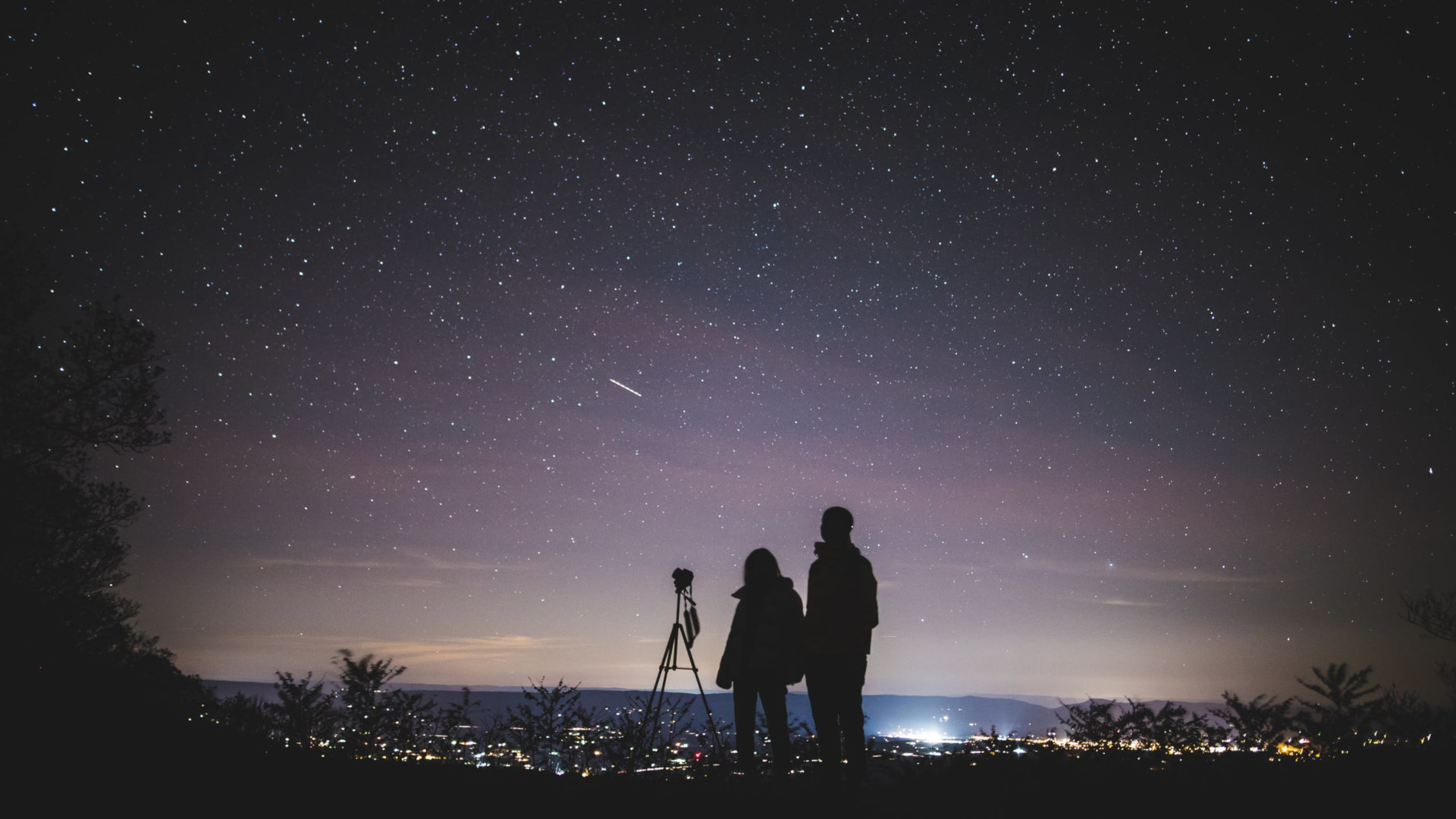
You don't have to travel to the other side of the globe and set up your telescope far away in the desert, on a deserted island, or high up in the mountains to get a breathtaking view of our Milky Way.
Within the radius of our ever-expanding cities, we see fewer and fewer stars—whether with the naked eye or through a telescope—due to artificially generated light, known as light pollution. Neon signs, streetlights, and car headlights now illuminate our nights so brightly that 60% of Europeans can no longer see the Milky Way from where they live; in North America, the figure is as high as 80%.
Nevertheless, there are still places where you can observe the (almost) natural night sky. The International Dark Sky Association (IDA), a nonprofit organization based in the United States, designates these areas and raises awareness about light pollution. “The night sky is our shared global heritage,” writes the IDA. It is our responsibility to preserve it for future generations. More than 90 so-called Dark Sky Places are recognized worldwide, and four of them are located in Germany. They are situated in Brandenburg, in the Thuringia-Hesse-Bavaria border region, in North Rhine-Westphalia, and in Bavaria. Amateur astronomers and astrophotographers will find ideal conditions there to pursue their passion.
LIGHT PROTECTION ZONES FOR THE WELL-BEING OF PEOPLE AND NATURE
To be recognized as a Star Park, public areas must first meet certain criteria. For example, they must actively work to protect the night sky. First and foremost, this means reducing artificial light in all areas. Lights should not shine upward or horizontally, should use warm-white light whenever possible, and should be limited in the amount of time they are on. Ideally, there should also be a core zone completely free of lighting, surrounded by a protective buffer zone. However, educational efforts regarding light pollution—in the form of guided tours and intensive public outreach—are also essential.
This alone can significantly control sky brightness. Incidentally, this is measured with a Sky Quality Meter in mag/"² (magnitudes per square arcsecond): the higher the value, the lower the light pollution. The highest value measured by the SQM is 22 mag/"², though this no longer occurs in Central Europe. However, at 21.5 mag/"² or higher, the sky is already dark enough to offer a spectacular view of the summer and winter Milky Way. In cities and metropolitan areas with a dim starry sky, on the other hand, the values are usually below 18.5 mag/"².
These artificial light sources disrupt our day-night rhythm. For example, more and more people are suffering from sleep disorders. Animals, in particular, rely on the natural cycle of light and dark for foraging and reproduction. Nocturnal animals and birds lose their sense of direction more quickly due to brightly lit billboards and skyscrapers; for many insects, these structures are death traps. Without insects, in turn, adequate pollination of plants is at risk.
All of these nature parks share the same goal: They not only raise awareness about astronomy and light pollution but also serve as role models. They demonstrate that it is possible to protect our night sky using simple measures. Of course, this isn’t just for amateur astronomers and their telescopes, but for people, animals, and a functioning ecosystem in general.
FOUR STAR PARKS IN GERMANY
The spectacular views are sure to pique your curiosity about the project. The astronomical calendar is full of events—both big and small—that make it worth packing your telescope, tripod, and homemade sandwiches and heading to the nearest star park. In Germany, the best place to start your journey to the stars and galaxies is here:
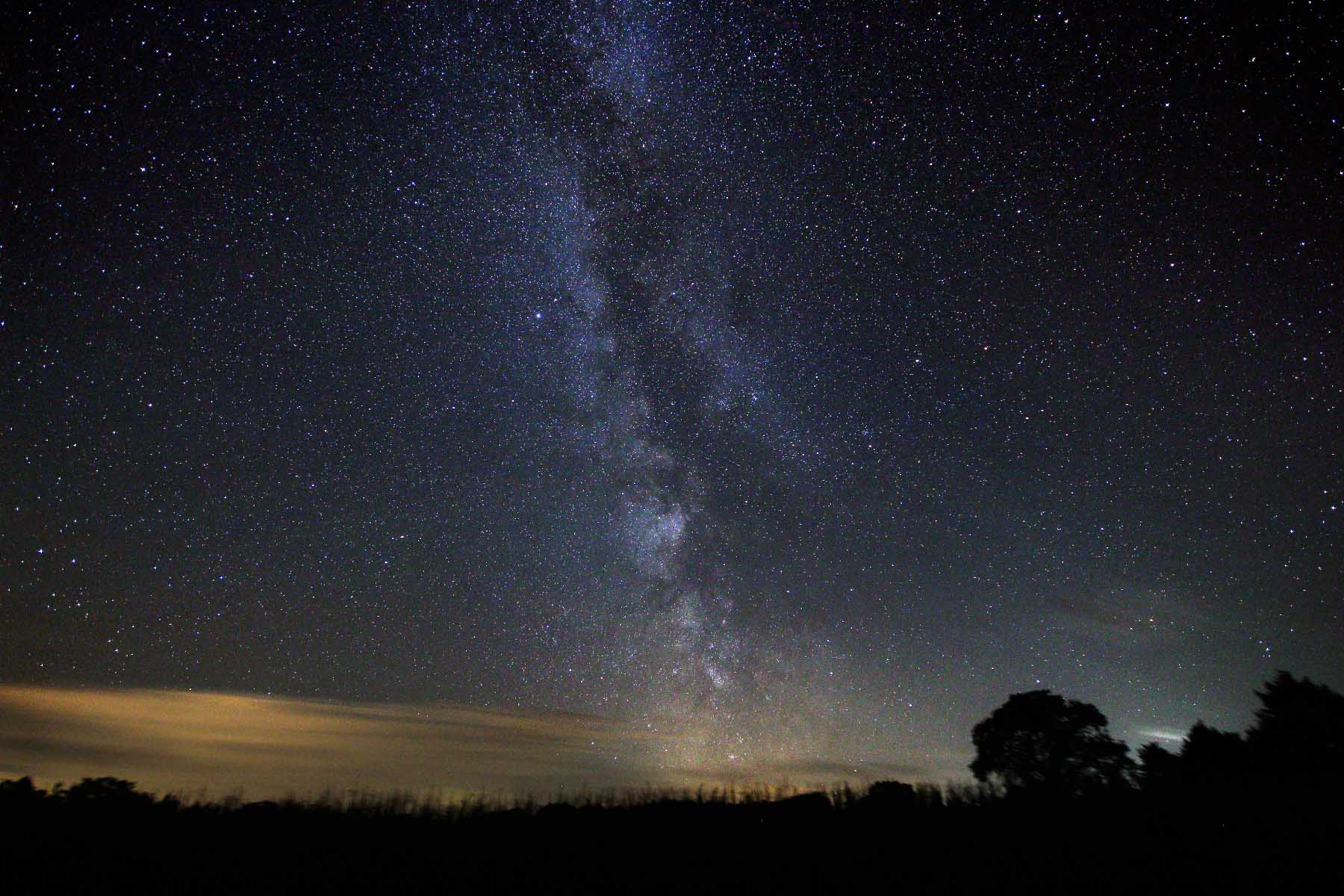 Westhavelland Star Park / Photo: Thomas Becker
Westhavelland Star Reserve, Brandenburg
The Westhavelland Star Reserve was designated Germany’s first star park in 2014. It encompasses the Westhavelland Nature Park and the municipality of Schollende, covering a total area of 1,380 km². There are no opening hours or admission fees here. At ten designated observation sites, astronomy enthusiasts can set up their telescopes or learn more about the starry sky from informational signs.
The sparsely populated area within and north of the 40 km² core zone is particularly rich in stars, with values of up to 21.78 mag/"², making it especially popular for stargazing. The district of Gülpe-Havelaue, considered the darkest place in Germany, is also located there. It’s hard to believe that the nature park is only 70 km outside of Berlin. The Star Park also offers year-round activities such as night hikes, photography workshops, and moonlight kayaking, and lectures are held regularly at its own observation station, Sternenblick Parey.
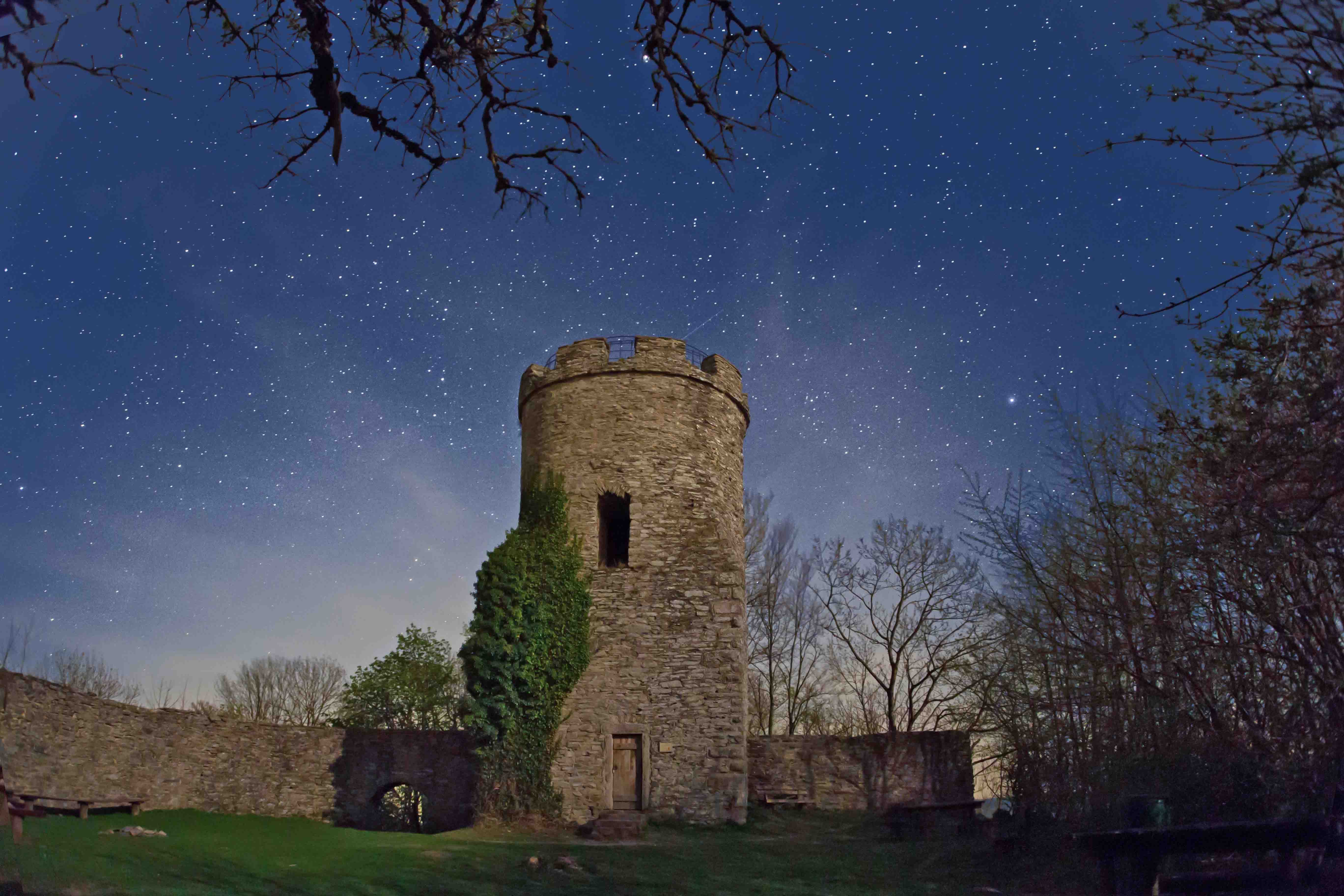 Rhön Star Park, Ebersburg Ruins / Photo: Werner Klug, Sternenpark Rhön Association, Inc.
Rhön Star Park Biosphere Reserve, Bavaria-Hesse-Thuringia
The Bhön Biosphere Reserve is easily accessible thanks to its central location in the tri-state region of Bavaria, Hesse, and Thuringia. At the same time, the area itself is relatively sparsely populated and therefore offers a beautiful dark sky with peak values of up to 21.78 mag/"². The Milky Way and the zodiacal light, for example, are clearly visible. In 2014, the 2,430 km² area was designated a Star Park.
The six newly built stargazing spots are equipped with a polar star finder, a rotating star chart, and a wicker lounger. During the day, hikers can learn from the informational signs; at night, amateur astronomers can explore the sky in a relaxed and playful way. Those who want to learn more can also take part in astronomical moon and star tours organized by the Sternenpark Rhön e.V. association.
Fulda, Germany’s first “Star City,” is also located here. With a lighting concept, it is actively combating light pollution—just like the Star Park—and aims to demonstrate that urban life and ecology are compatible.
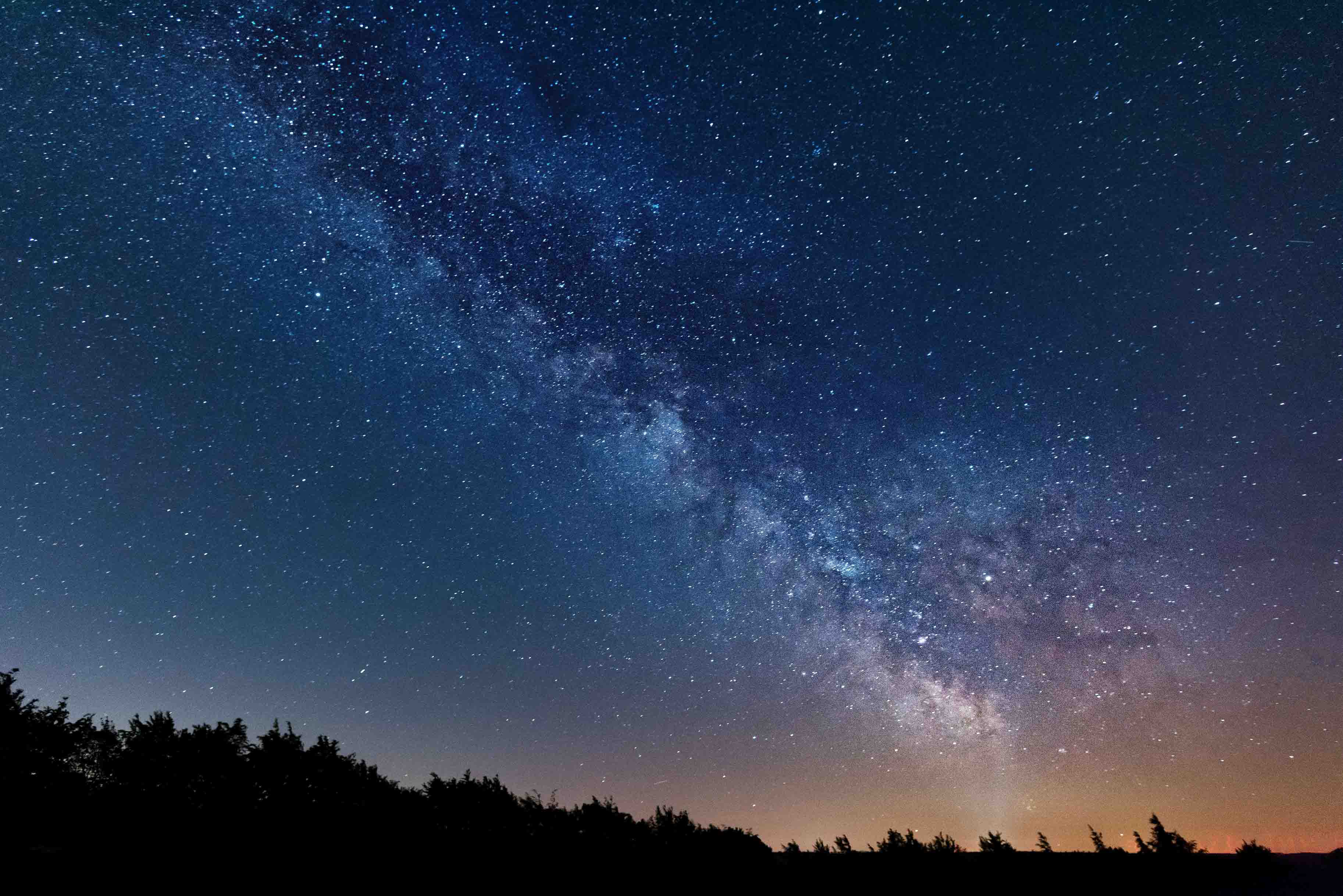 Eifel Star Park / Photo: Maximilian Kaiser
Eifel National Park Star Park, North Rhine-Westphalia
You can also enjoy beautiful stargazing in Germany’s most populous state. The Eifel National Park was first granted provisional status as a dark sky park in 2014 and finally received official recognition in 2019. Since then, the dark sky—with a magnitude of approximately 21.2 mag/"²—has attracted many astronomy and nature enthusiasts from urban areas. It is located only about 65 km from Cologne.
At the Vogelsang IP Observatory, located in the heart of the 120 km² site, powerful telescopes and wide-field binoculars are available for use. The astronomy workshop “Stars Without Borders” regularly offers events and guided observations there, both day and night, in German and English.
The national park’s next goal is to be officially designated as a “Star Region.” Through the project “Under the Starry Sky—The Eifel at Night,” measures to combat light pollution will also be implemented within a 15-kilometer radius of the park.
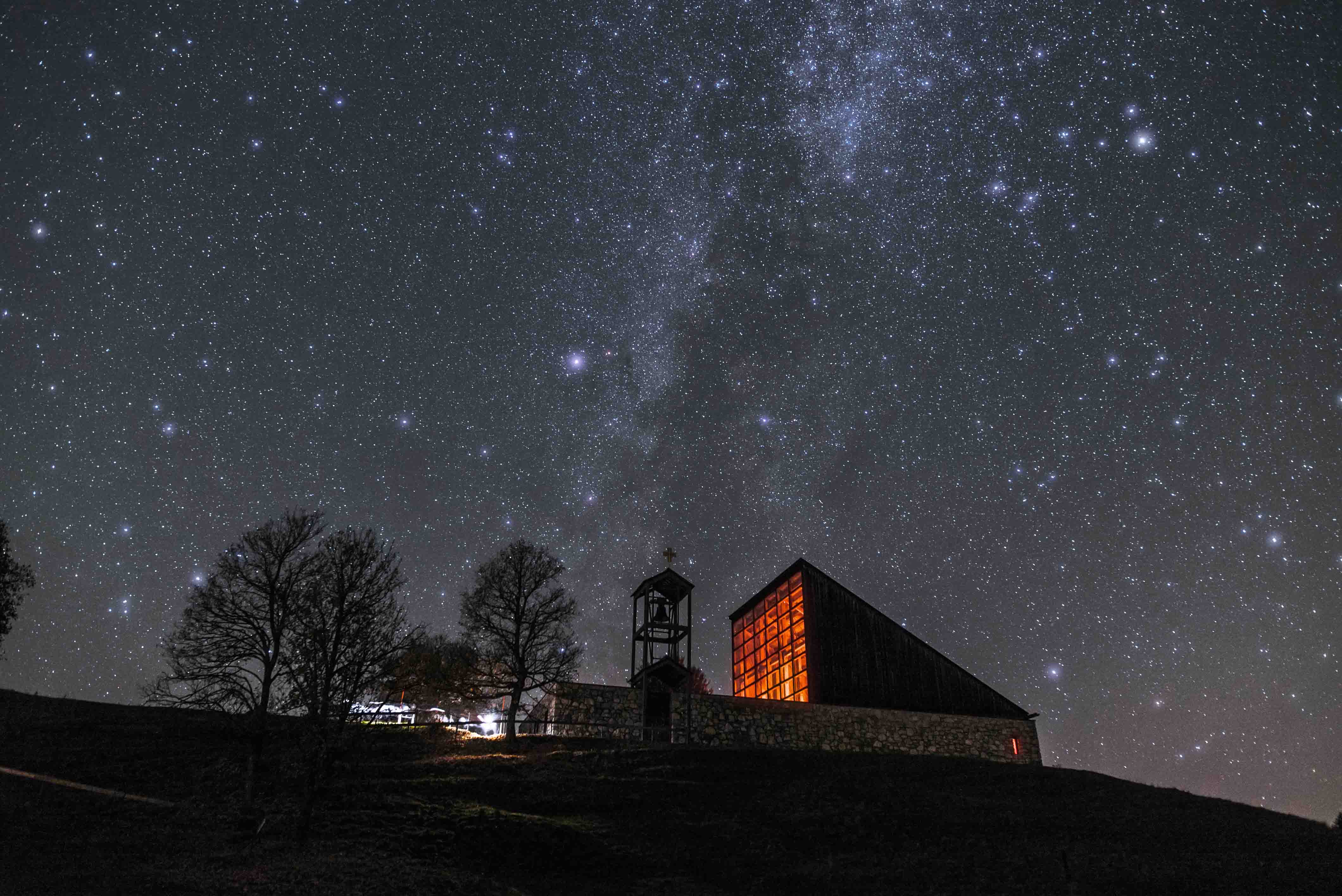 Winklmoos-Alm / Photo: Sebastian Voltmer, abenteuer-sterne.de
Winklmoos-Alm Star Park, Bavaria
The Winklmoos-Alm in the Chiemgau Alps has been the newest member of Germany’s Star Parks since 2018. At an elevation of 1,200 meters, visitors are treated to an almost unobstructed panoramic view of the night sky. Up to 5,000 stars are visible to the naked eye, and with a little luck, you can even spot our neighboring galaxy, the Andromeda Galaxy. Alpine farmers, restaurant owners, and residents have joined forces and retrofitted over 100 light sources to make this view possible.
Astronomer and physicist Manuel Phillip also offers guided stargazing tours for observing with the naked eye and shows visitors how to find the most beautiful constellations. The nearest major towns are 30–40 km away, so the night sky benefits from a naturally dark environment and easily reaches values of 21.60 mag/"². The only starlight park in the Alps is also easily accessible by car, and visitors can stay overnight in lodges right in the heart of the area.
A Star Park Instead of Outer Space
Traveling to the great outdoors to see the stars is one of the simplest and most accessible forms of travel. To some, gazing at a clear starry sky might even be considered a fundamental human right. Whether in search of a deeper connection with the universe, spectacular views, or like-minded amateur astronomers, interest in astro-tourism continues to grow.
In the past, we might have imagined that this meant a trip to the moon complete with a rocket and a spacesuit. Today, all it takes is your spirit of adventure to explore the sky in a starlight park.
If you want to go on an observing trip with your own telescope, be sure to bring the following essentials: a sturdy carrying bag for your optics, a carrying casefor eyepieces and observing accessories, a red-light lamp, and a notebook so you can record the experience and your discoveries. After all, chances are good that you’ll see the familiar sky in a star park with entirely new eyes and discover one or two new objects.