
10 Must-Have Items for the 2026 Solar Eclipse
On August 12, 2026, the sky over Spain will darken. Right in the middle of the day. But which products are must-haves?
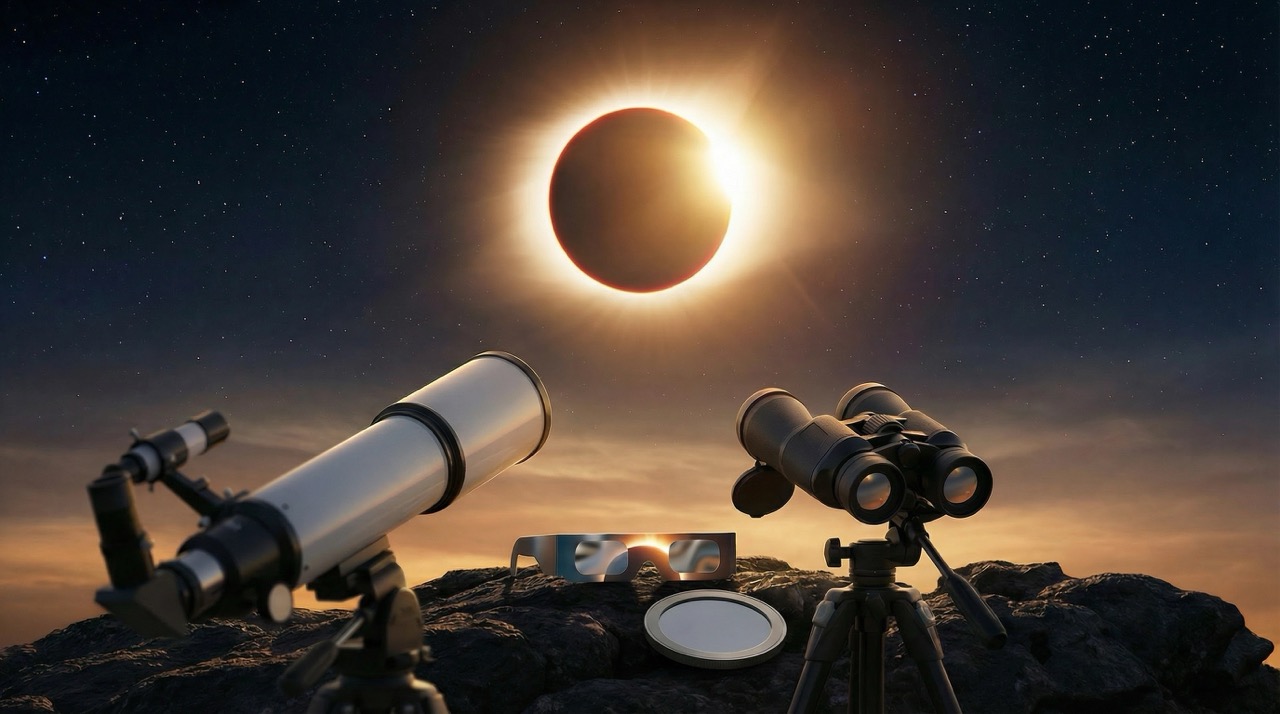
The sun disappears this year and is obscured by the moon. The corona glows, and the brightest stars become visible. A total solar eclipse takes place.
The last solar eclipse in Europe took place in 1999—that was 27 years ago. Those who witnessed it will never forget it. Those who weren’t there or weren’t even born yet now have a second chance.
The path of totality will pass over Iceland, the Atlantic Ocean, and then across northern Spain—Bilbao, Valladolid, Valencia, and Palma de Mallorca. Even if you’re not in the path of totality, you’ll still experience a partial eclipse with over 80% coverage. That, too, is impressive and well worth seeing.
What do you really need to make the most of this moment? Here are ten products we recommend.
1. Solar eclipse glasses
Let’s start with the obvious: solar eclipse glasses. Without them, you’ll miss the partial phase entirely—whether you’re watching from Germany or standing right in the path of totality in Spain.
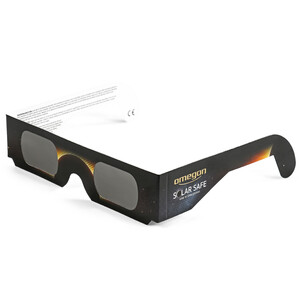
Omegon offers two versions. The Solar Safe is the classic cardboard pair of sunglasses with a safe solar filter film. Compliant with ISO 12312-2, CE-certified, and made in the USA. Affordable, reliable, and ready to use right away. Tip: A volume discount is available for orders of three or more.
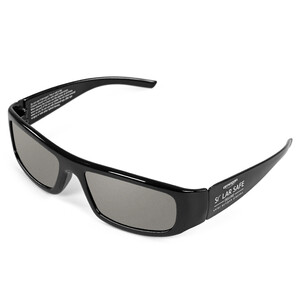
If you're looking for more comfort, go for the Solar Safe Deluxe. These are genuine eyeglass frames with scratch-resistant polymer lenses and a high UV protection factor of OD 5.0. The sun's glare appears in a rich orange hue. The comfort of wearing them simply can't be compared to that of cardboard sunglasses.
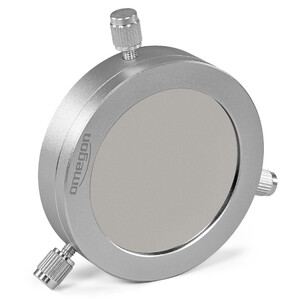
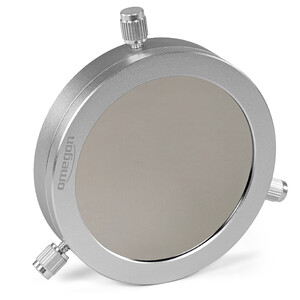
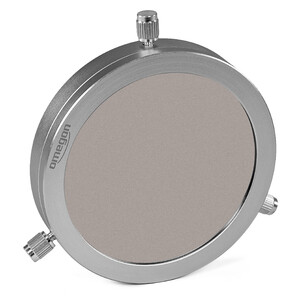
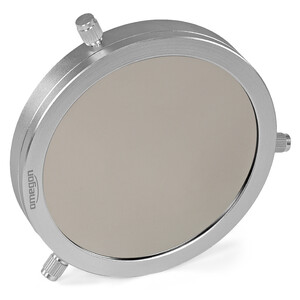
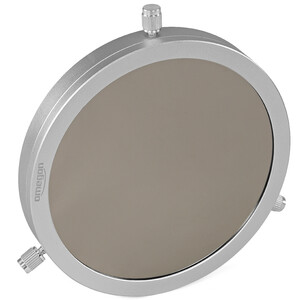
2. Omegon Helievo Solar Filter for Telescopes
Many people watch the solar eclipse through a telescope or binoculars. That’s ideal. But you’ll also need a suitable solar filter for the lens—preferably one you can use right away.
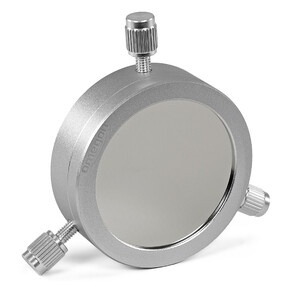
Omegon Helievo filters come in a sturdy aluminum frame and are available in eight sizes ranging from 60 to 192 mm. Simply measure the outer diameter of your telescope tube, choose the right size, and attach the filter. Done. True plug-and-play.
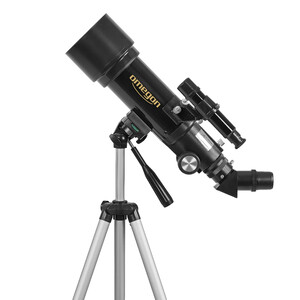
3. Omegon Teleskop AC 70/400 Solar BackPack AZ
Don't observe the sun regularly, don't own a telescope, but still want something tangible to take on your travels? Then the AC 70/400 Solar BackPack AZ is just the thing for you.
Telescope, solar filter, tripod, two eyepieces. All in a single backpack. Set it up, aim it at the sun, observe. No prior knowledge required, no tinkering, no thinking. This kit has one purpose: to let you easily view the sun.
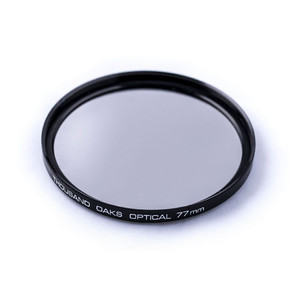
4. Thousand Oaks SolarLite Sun Filter for Camera Lenses
Almost everyone who witnesses a solar eclipse wants to capture it. The good news is: you don't have to be a pro to do it.
If you own an interchangeable-lens camera, simply screw a SolarLite filter from Thousand Oaks into the filter thread. It’s available in 14 diameters ranging from 37 to 95 mm. Screw it on, take pictures of the sun, and then enjoy the results.



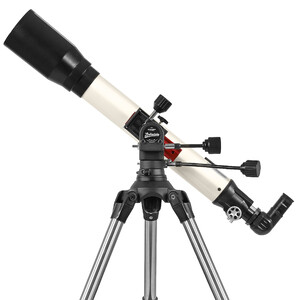
5. Omegon Horizon AC 70/700 AZ-Bellavista Telescope
Perhaps you’ve experienced this before: After a solar eclipse, the sky suddenly becomes something you can’t ignore. The moon, the planets, the stars. You want to see more. The Horizon AC 70/700 AZ-Bellavista is the perfect telescope for exactly that moment.
A truly excellent beginner's telescope on an azimuth mount with a stainless steel tripod. Achromatic optics, Crayford focuser, red-dot finder, two Plössl eyepieces, Amici prism, Barlow lens, and smartphone adapter. Observe the Moon, planets, and Saturn's rings. And with the appropriate solar filter, it can also be used during the day.
(Currently, the telescope is shipped without a solar filter. A compatible Omegon filter (60–70 mm) is available separately.)
6. Smart Telescopes: ZWO Seestar & Vaonis Hestia Solar
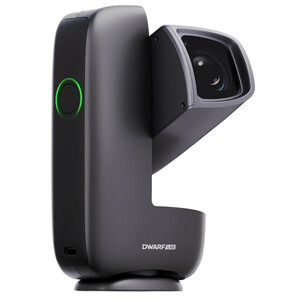
Smart telescopes are no longer just a fad—they’re genuine observation tools. And the best part is: with the right solar filter, almost all of them can be used to observe the sun, and many models even come with the filter included.
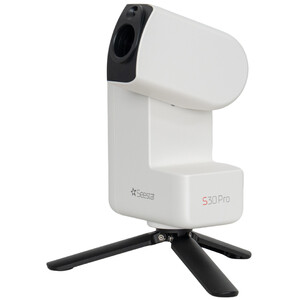
The ZWO Seestar S50 and S30 Pro are two of the best-known models. They are compact, easy to use, and can be used during the day with a solar filter.
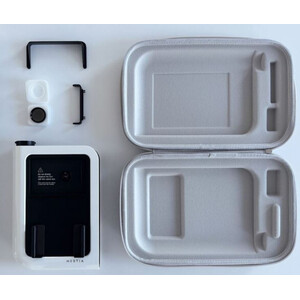
If you want to travel light, check out the Vaonis Hestia Solar. It’s barely bigger than a hardcover book, weighs less than a kilogram, and fits in any carry-on bag. But how does it work? Set up the tripod, place your smartphone on it, and launch the app. That’s it. A solar filter, hard-shell case, lens hood, and sun finder are included. And perhaps most surprisingly: the device works entirely without batteries. Inside, there’s just an optical system that pairs with your smartphone.
7. Omegon MiniTrack LX Quattro
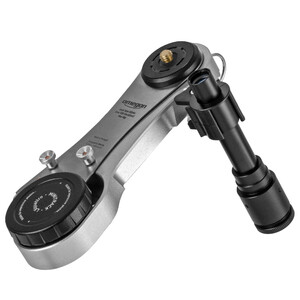
Star trackers are commonly used in night photography. They work just as well for solar eclipses, because, in essence, a star tracker is a mini mount. You mount your camera on it, and the tracker smoothly guides the sun across the frame. No blurry photos, no post-processing.
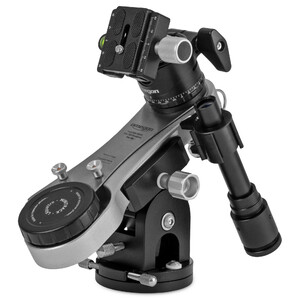
The MiniTrack LX Quattro operates purely mechanically, meaning it requires no electricity at all. Simply mount it on a tripod, attach the camera, align it, wind it up like a clock, and you’re done. And if you want to align the MiniTrack with even greater precision, you can use the set with the polar alignment scope.
8. Acuter Sonnenteleskop ST 40/400 ELITE PHOENIX 40
Once you’ve looked through an H-alpha solar telescope, you’ll never view the Sun in white light again. It’s like a whole other universe. Prominences jutting out into space from the Sun’s edge. Filaments stretching across the disk like dark streaks. None of this is visible in white light.
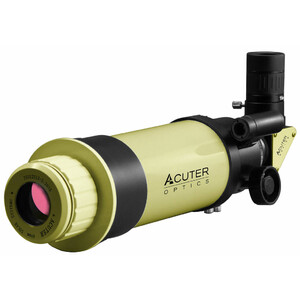
The Acuter ST 40/400 ELITE PHOENIX 40 opens up this world. H-Alpha with a bandwidth of less than 0.6 angstroms. It really impressed us during our observations. The price is fair for an H-Alpha telescope. Customer reviews confirm this: 5 out of 5 stars.
The package includes an aluminum case, a zoom eyepiece (5–16 mm), a solar filter, a red-dot sight, a zenith mirror, and a smartphone adapter. In the evening, the telescope can also be converted into a standard refractor for observing the Moon and planets.
9. Baader AstroSolar® Solar Filter Film OD 5.0
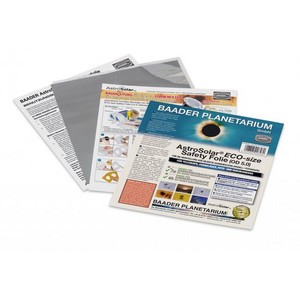
If you enjoy DIY projects and want to customize your own filter, the Baader AstroSolar® film is the perfect choice. The 20 × 29 cm sheet is sufficient for a small to medium-sized filter. In addition, the AstroSolar provides 99.999% light attenuation and a high-contrast view of the Sun. This film has been the standard for DIY projects for decades. Assembly instructions are included.
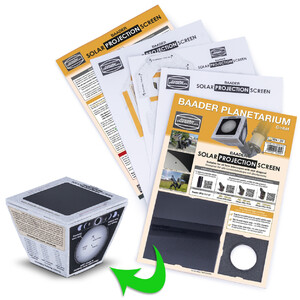
10. Baader Solar Projection Screen
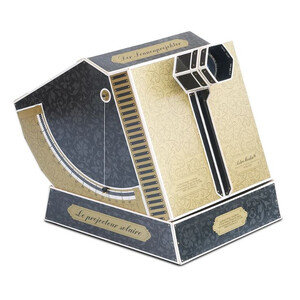
Want to experience the solar eclipse with a group without everyone crowding around the eyepiece? The Solar Projection Screen projects the image of the Sun onto a 9 × 9 cm rear-projection screen. Best of all, multiple observers can view it at the same time. It’s safe, easy, and ideal for schools, clubs, or families.
The screen is a cardboard kit with a T2 thread, compatible with refracting telescopes with focal lengths ranging from 250 to 1,200 mm. To use it, you will also need an eyepiece projection adapter with a T2 mount and a compatible eyepiece.
See more in the shop
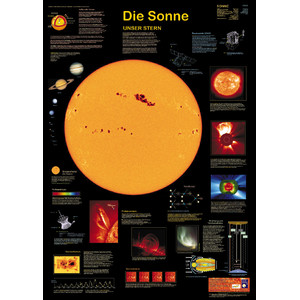
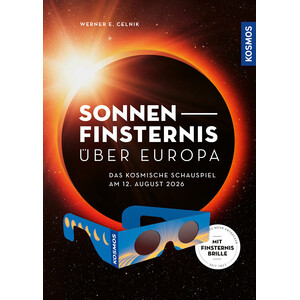
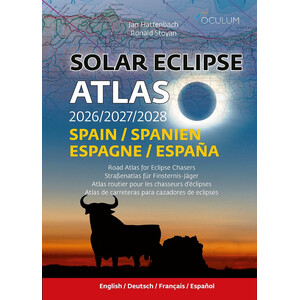
Those were our ten recommendations. But feel free to keep browsing. At Astroshop, you’ll also find books, posters, accessories, and kits related to the solar eclipse.

Author: Marcus Schenk
Marcus is a stargazer, content creator and book author. He has been helping people to find the right telescope since 2006, nowadays through his writing and his videos. His book "Mein Weg zu den Sternen für dummies Junior" advises young people, and those who are still young at heart, what they can discover in the sky.
As a coffee junkie, he would love to have his high-end espresso machine by his side under the starry sky.